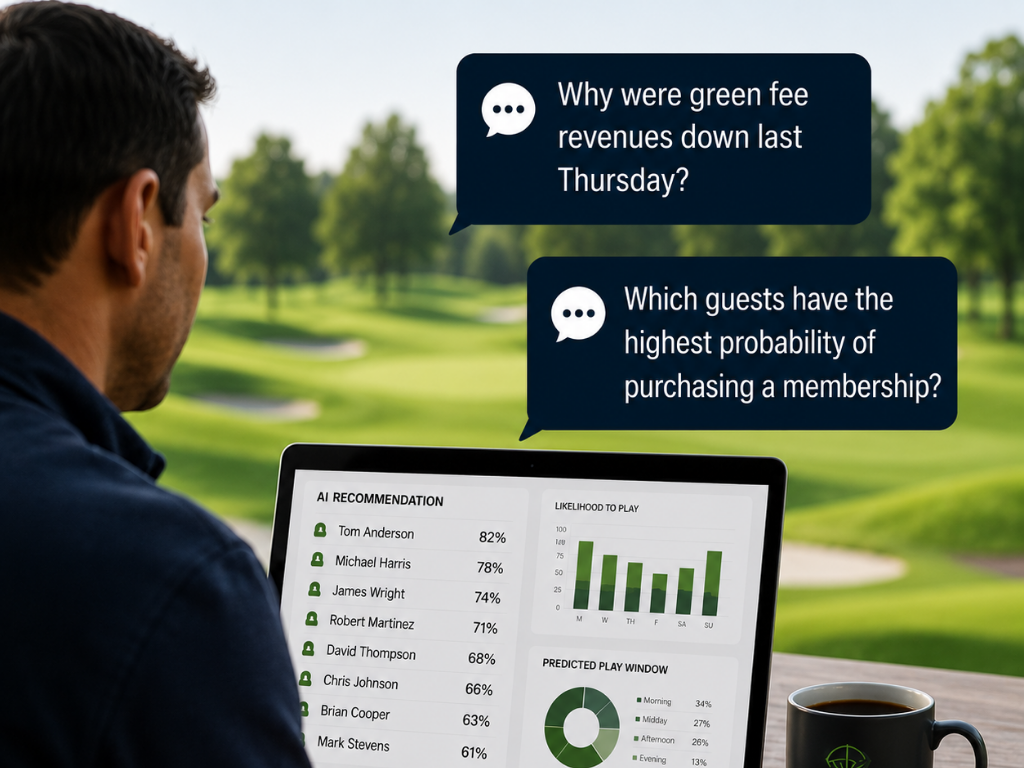
For decades, golf management software companies competed by building better reports. More dashboards, more charts, more filters, and more ways to organize information became the standard for measuring the strength of a technology platform. Some companies built their entire business on report aggregation and consolidated dashboards. But just as the buggy whip became obsolete with the automobile and the Palm Pilot disappeared with the smartphone, the traditional business report is quickly becoming a relic of the past.
The future of business intelligence in golf isn’t another dashboard. It’s a conversation.
Why Traditional Reporting Falls Short
Reports have one built-in limitation: they require the user to already know where to look. A manager has to know which report answers the question, then pull it, filter it, export it, and interpret it themselves. That process takes time, and it depends on already knowing the right question to ask.
This is the gap that conversational analytics, sometimes called natural language query or chat-with-your-data, is built to close. Instead of navigating a dashboard, a manager asks the question directly, in plain language, and gets an answer.
What a Conversational Interface Changes
Imagine opening your golf management system and simply asking, “Why were green fee revenues down last Thursday?” Instead of searching through multiple reports and exporting spreadsheets, AI analyzes the tee sheet, weather history, pricing, cancellations, pace of play, and customer behavior before providing a clear explanation. More importantly, it doesn’t stop at what happened. It explains why it happened and suggests what action to take next.
The same applies to forward-looking questions:
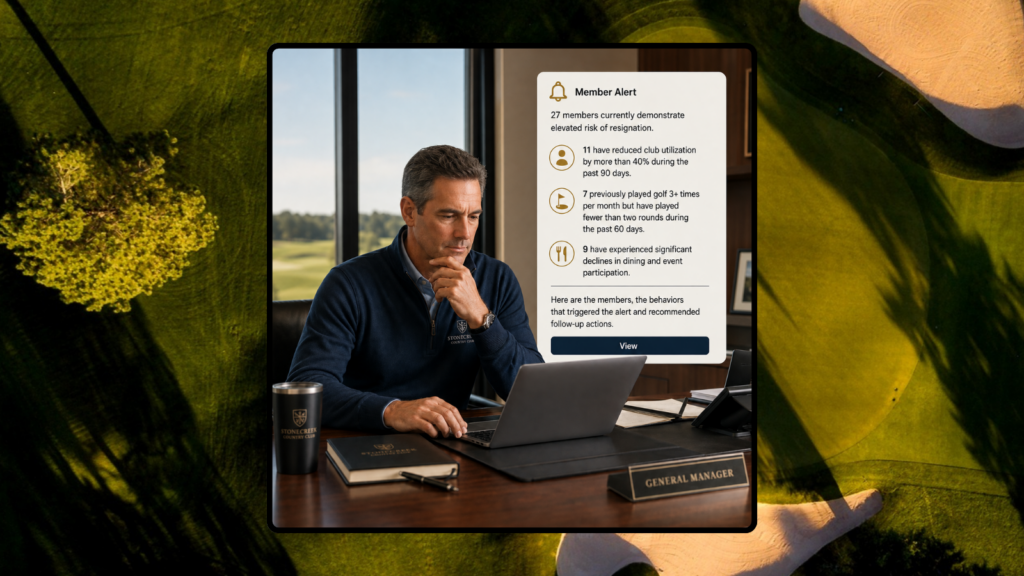
- “Which members are most likely not to renew?”
- “Which guests have the highest probability of purchasing a membership?”
AI can evaluate years of transactional history, booking patterns, retail purchases, food and beverage spending, lesson participation, event attendance, and dozens of other variables to produce actionable recommendations in seconds.
Reports Require Searching. Conversation Doesn’t.
This is the real shift in how managers interact with golf management technology. A report-based system depends on the manager already knowing where the answer is likely to be. Conversational AI lets managers ask a question naturally, explore follow-up questions, and uncover opportunities they may never have thought to look for in the first place.
The true value of AI here isn’t that it replaces reports. It’s that it replaces the process of searching for answers. Every manager, golf professional, food and beverage director, and owner gains immediate access to what functions like an intelligent business analyst, capable of interpreting millions of data points in real time.
What This Looks Like Across Departments
The same conversational approach applies wherever a golf facility already has data:
- Golf operations: Tee sheet utilization, pace of play, cancellation trends
- Membership: Renewal risk, engagement patterns, upgrade likelihood
- Food and beverage: Sales trends by daypart, event-driven demand
- Retail: Purchase patterns tied to weather, season, and customer segment
Rather than pulling a separate report for each department and reconciling them manually, a manager can ask a single conversational system to connect the dots across all of them.
Where This Is Headed
The next generation of golf management software won’t be measured by the number of reports it can generate. It will be measured by the quality of the conversations it can have, the recommendations it can make, and the decisions it helps operators make with greater confidence. The era of reporting is coming to an end. The era of intelligent conversation has already begun.
Frequently Asked Questions
What is conversational AI in golf management software?
It’s an interface that lets managers ask operational questions in plain language, such as why revenue was down on a specific day or which members are unlikely to renew, and receive a direct, data-backed answer instead of building or interpreting a report themselves.
How is conversational AI different from a dashboard or standard report?
A dashboard or report requires the user to already know which metric to check and how to interpret it. Conversational AI answers the question directly, explains the reasoning behind it, and can suggest a recommended next step, all through natural language.
Does conversational AI replace traditional reporting entirely?
Not entirely. It replaces the manual process of searching for the right report and interpreting the data. Reports still have a role for detailed record-keeping, but they’re no longer the fastest way to get an answer to a specific operational question.
Can conversational AI answer questions across multiple departments at once?
Yes. Because it draws on the same underlying data, a golf, membership, food and beverage, or retail question can be asked and answered through the same conversational interface, without needing a separate report for each department.
If you’d like to see this working against a live golf course portfolio with real data, let us know.